
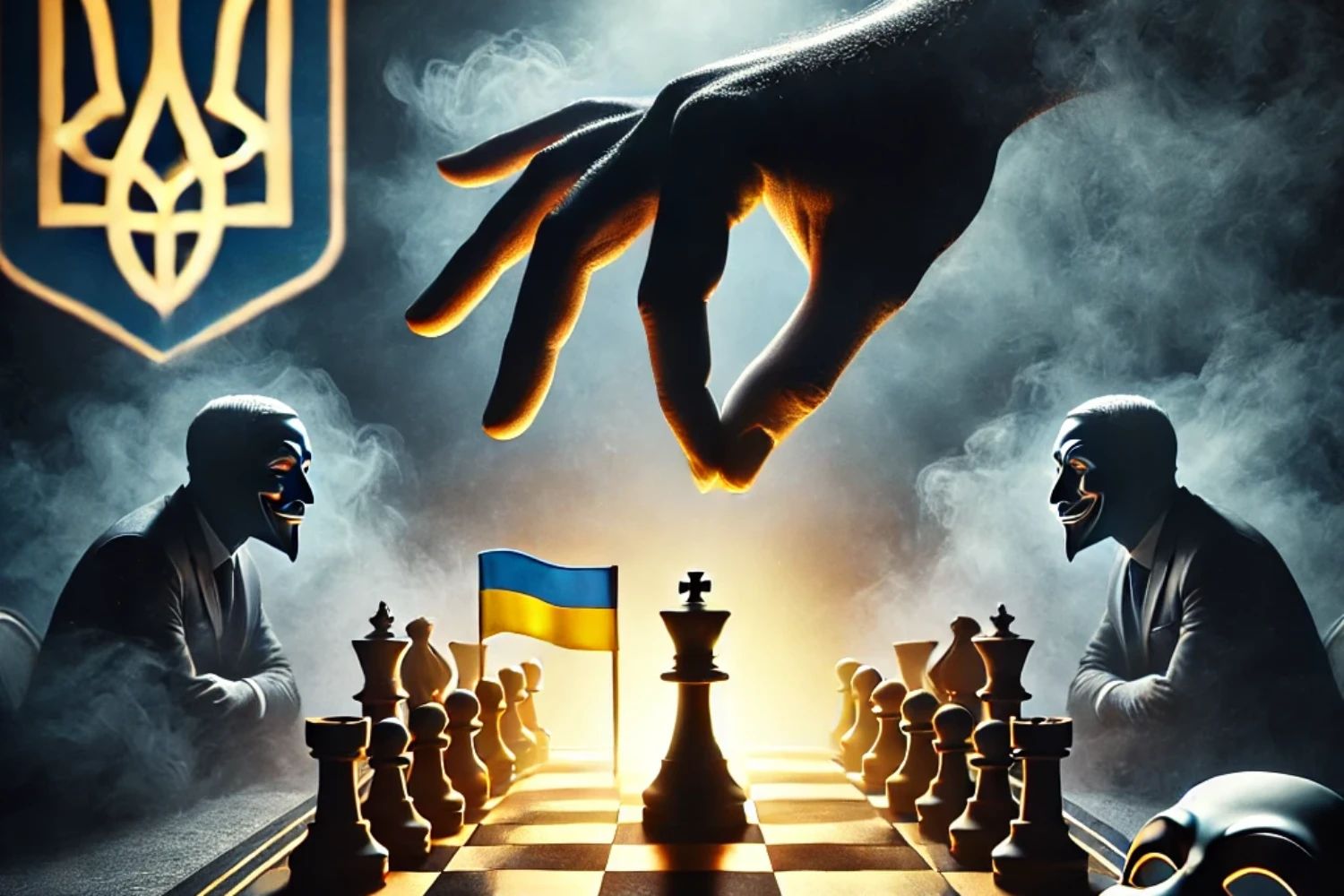
Who’s Playing Whom? Rethinking the Trap Narrative
On March 19th, The Economist published an editorial titled “The Trap Vladimir Putin Has Set for Donald Trump.” Their message was sharp: Trump, eager for a win, was duped by illusions of diplomacy and walked away empty-handed. A geopolitical novice ensnared once again by an autocrat.
But:
What if that’s the wrong story?
What if Donald Trump isn’t being manipulated by Putin – but is knowingly executing a strategy that serves someone else’s interest?
What if Ukraine isn’t a bargaining chip—but a deliverable?
The Economist’s Frame: A Trap and a Fantasy
In The Economist’s analysis:
- Trump threatens sanctions, then retreats.
- Putin offers a weak “deal” with no real concessions.
- America risks weakening itself and its alliances.
- Trump, in trying to appear strong, looks instead like a man outmaneuvered.
This interpretation depends on one crucial assumption: that Trump wants peace and strength for America.
But what if he doesn’t?
A Sharper Hypothesis
Let’s invert the lens and try a darker, more strategic view—one that doesn’t rely on Trump being seduced by power or driven by ego.
What if Trump doesn’t care about:
- NATO unity,
- Western alliances,
- Ukraine’s sovereignty,
- Or even public perception of strength?
And instead only cares about:
- Personal gain (financial, legal, reputational),
- Undermining institutions that constrain him,
- Delivering for those who hold leverage over him?
Suddenly, the pattern we’ve witnessed over the past decade makes more sense—not as chaos, but as strategy.
Ukraine as a Deliverable, Not a Dilemma
In this frame:
- Trump backing off sanctions is not weakness—it’s compliance.
- Proposing vague “cooperation” with Russia is not naïveté—it’s a script.
- Failing to condemn Putin is not hesitation—it’s loyalty.
The Economist calls Putin’s offers a fantasy. But maybe the real fantasy is our belief that Trump is still playing for Team America.
Who Is the Trap Really For?
If Trump is transactional to the core, then diplomacy is simply leverage. Alliances are obstacles. And Ukraine is expendable.
Which raises the uncomfortable question:
What if the trap isn’t for Trump – but for us?
Because if he knows exactly what he’s doing, then it’s not diplomacy gone wrong.
It’s strategy – executed in plain sight.
Beyond Politics: Strategic Chaos as Leadership Challenge
This isn’t just about Trump or Putin. It’s about a fundamental leadership challenge:
What do you do when someone isn’t playing by the rulebook everyone else follows?
In business, we see versions of this when:
- A competitor systematically violates industry norms
- A negotiation partner constantly shifts positions
- A board member creates perpetual uncertainty
- A leader manufactures crises to justify extreme measures
Conventional wisdom says: “They’re irrational.” “They’re incompetent.” “They’re confused.”
But what if they’re none of these things? What if apparent chaos is actually deliberate strategy?
The European Dilemma
A close friend recently put it bluntly:
“We’ve outsourced our security to the United States. We’re in their pocket. And that means we can’t afford to do what’s morally or geopolitically right—not in the short term.”
That insight captures a central tension in European foreign policy: strategic dependence has become moral paralysis. But that dependence isn’t new—and it hasn’t gone unnoticed.
As far back as 1987, Donald Trump wrote:
“Why are these nations not paying the United States for the human lives and billions of dollars we are losing to protect their interests?”
An Ideology of Transaction
This wasn’t a passing comment.
Trump’s 1987 warning wasn’t about personal gain—it was about a worldview. One that sees alliances not as shared values, but as bad deals. One that frames protection as a service to be billed—not a commitment to a larger good.
This is where the conversation shifts.
Maybe Trump isn’t being manipulated.
Maybe he’s not even playing a game.
Maybe he’s acting on a belief system that has been consistent for decades:
America doesn’t owe anyone anything.
That’s not incoherence. That’s ideology.
And if that’s the case, the danger isn’t that Trump is unpredictable.
The danger is that he’s entirely predictable.
Leadership When the Rules Change
For leaders navigating this new landscape:
- Question your assumptions: When someone consistently acts against what you believe is their interest, consider that they might be optimizing for something entirely different.
- Look for patterns in chaos: When unpredictability becomes predictable, it’s no longer random—it’s systematic.
- Focus on dependencies: Where are you vulnerable to actors with fundamentally different objectives? Those dependencies are your greatest risks.
- Strengthen your core principles: When external reference points become unreliable, internal clarity becomes essential.
- Prepare for new rules: The post-WWII international order wasn’t the first system of global relations, and it won’t be the last.
The Cost of Dependency
And if your moral compass points only toward self-interest, then even betrayal can look like leadership.
The cost of dependence isn’t just strategic – it’s ethical.
And when we outsource not just our defense, but our judgment, our values, and our moral clarity, we stop being allies. We become assets.
This moment demands more than alignment. It demands courage.
Because if we keep waiting for someone else to defend our values, we’ve already surrendered them.
Final Reflection
This isn’t a conspiracy theory. It’s a systems-level risk assessment. Democracies don’t only fall through coups. Sometimes, they drift into failure – one silent concession at a time.
Whether Trump is manipulated or complicit, the result is the same:
- A weakened Ukraine.
- A fractured West.
- A resurgent Russia.
And perhaps most dangerously: a public still looking for traps in the wrong places.
Because sometimes, the mask of weakness isn’t a flaw – it’s a feature.
This article presents an alternative perspective designed to challenge conventional thinking about strategy and leadership. I invite you to consider whether this lens might provide insights for navigating environments where traditional rules no longer seem to apply.